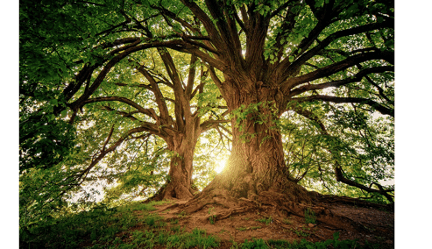
What is that magical power that helped the whole world stay healthy and green?
Have you ever wondered how earth collected its puzzling pieces one by one to create a harmony between life.
To know about this we need to delve into the story of our planet first. Fast backward to 700 million years (4.5 billion to 540 million years ago), during the Precambrian period. PRE-CAM-BRIAN period? What is it?
The time when there is no dinosaurs, no fancy animals, no colorful plants! All you could see is only rocks and water. The earth is likely experimenting to discover what it wants to become when it grows up, just like as we do when we were kids. Certainly, our ambitions have evolved over time. For those born in the 90’s old black and white baby pictures might bring back memories that make you laugh, yet you still hold a secret fondness for them.
Absolutely fascinating! As we flip through the pages of Earth’s history, we arrive at the late Precambrian period, approximately 700 million years ago. During this era, the earliest organisms emerged, consisting of single-celled life forms like algae and mosses, primarily found in aquatic environments. As time progressed, plants gradually evolved unique structures that enabled them to adapt and flourish on land. It’s truly intriguing, isn’t it?
We continue our journey through time, now advancing into the Ordovician period, approximately around 450 million years ago from now. During this era, more complex plants began to emerge, including early vascular plants that had structures like roots, stems, and leaves. These adaptations enabled them to transport water and nutrients more efficiently and grow taller, eventually giving rise to diverse plant species.
I’m not attempting to cover every era in detail, but rather focusing on the major periods.
Continuing our journey through 370 million years ago into the Devonian period. Often known as the ‘Age of Fishes.’
Unlike the modern trees, you see in the today’s world, these trees looked different. They were Lycophytes, horsetails and ferns that grew to large sizes and formed the first forests. This might be the reason why scientists referred to ferns as one of the oldest groups of plants on earth. Today there are 12,000 fern species and around 1200 lycophyte species currently present on Earth.
Okay coming back to the story of carbon.
Till date, plants continued to evolve and diversify over millions of years, leading to the vast array of plant species we have today. Thanks to the evolution process. Because this is what transforms the single cellular organism to multicellular organisms.
As we continue our journey through flipping the pages of Earth’s history, we arrive at a new era. Approximately, 300,000 years ago from now. Things really start to get exciting! Now you’re in a world filled with vibrant creatures, like animals in a dazzling parade. The trees are dressed in their finest clothes — colorful flowers showing off their beauty. And guess what? Humans and their little ones join in the fun too!
But hold on, here’s the cool part: Earth learned a clever trick.
Those fancy plants figured out how to balance the temperature by taking in the carbon dioxide that animals and humans were breathing out. And in return, they released something magical called oxygen through a process called photosynthesis. It’s like the ultimate teamwork between plants and creatures, creating a harmony that made life on Earth even more awesome!
As we see the plants grew and shed the leaves from the trees, something wonderful happened. The leaves, branches, and even roots turned into something called “organic matter.” It was like the Earth’s very own treasure, a gift from nature. But this treasure wasn’t just for decoration — it was essential for the world to thrive.
As time passed, little microorganisms and diverse community of tiny organisms, from earthworms to fungi, and creatures that are living beneath the soil started working their magic. They used their secret powers to turn the organic matter into special compounds. They work together to create a fertile soil. As they help further break down organic material and release nutrients that nourish plants. Together, they continued the legacy of transformation, breaking down organic matter and releasing precious nutrients that fed the plants.
This cycle sustains ecosystems and supports agriculture by enhancing soil structure, water-holding capacity, and nutrient availability.
And guess what happened next?
They even trapped something called “carbon” called soil organic carbon deep into the soil.
Imagine the trapped carbon deep in the soil to a Pandora’s Box, full of mysteries and wonders that hold the key to our planet’s heath and future. Totally the box is full of treasure trove of nutrients, a sanctuary for biodiversity, and a vital player in the global carbon cycle. Just, like in a myth, opening the box reveals both blessings and challenges. Who know curse too?
But now the villain enters the story
The bad witch who cared nothing for the beauty and harmony of the world. She believed that by unlocking the treasure trove (pandora’s box), she could unleash chaos and darkness upon the land. With a wicked laugh, she began to dig deep into the soil, chopping down trees, ignoring the delicate balance that had taken centuries to form.
As the witch’s shovel pierced the ground, a wave of despair swept through the land. Plants started to wither, and animals grew weak as their homes were destroyed. The delicate web of life began to unravel, and the once-vibrant world turned gray and lifeless.
Little did the witch know, her actions were not just harming the present, but also altering the future. By disturbing the soil organic carbon, she disrupted the global carbon cycle. That is she opened the pandora’s box releasing stored carbon into the atmosphere and contributing to climate change. The very balance of the planet was at stake.
But as the world grew darker, a glimmer of hope emerged. A brave group of children, guided by intelligent scientists and smart parents, determined to save their world, embarked on a quest to stop the bad witch. Armed with knowledge and a deep love for the Earth, they raced against time to close the treasure trove (pandora box) and restore the delicate balance.
With courage and teamwork, the children managed to outsmart the witch and seal the trove once again. As they did, the world slowly started to heal. Plants grew lush and green, animals thrived, and the once-gray skies cleared.
The children’s actions taught a valuable lesson — that the soil organic carbon was not just a treasure, but a responsibility. It was a gift from the past that needed to be protected for the future. And so, the world flourished once again, as the treasure trove remained a sanctuary of life, a guardian of biodiversity, and a vital player in the global carbon cycle.
So yet, there was hope. A path to redemption lay in the embrace of sustainable practices, in the wisdom of nurturing the land rather than exploiting it. Through careful land management, the soil’s organic carbon could once again accumulate, capturing carbon dioxide and offering a solution to the looming challenge of climate change.
And so, the story continues, a tale of resilience, harmony, and the interwoven connections between life and the land. As we tend to the soil, we become stewards of a legacy that spans generations, safeguarding the delicate balance that sustains us all.
The story of soil organic carbon is a reminder of the intricate connection between life on land and the health of our planet. It underscores the importance of preserving and nurturing our soils as a valuable resource for current and future generations.


 Exploring science
Leave a comment